1. Why Student Engagement Needs a Digital Upgrade in 2026
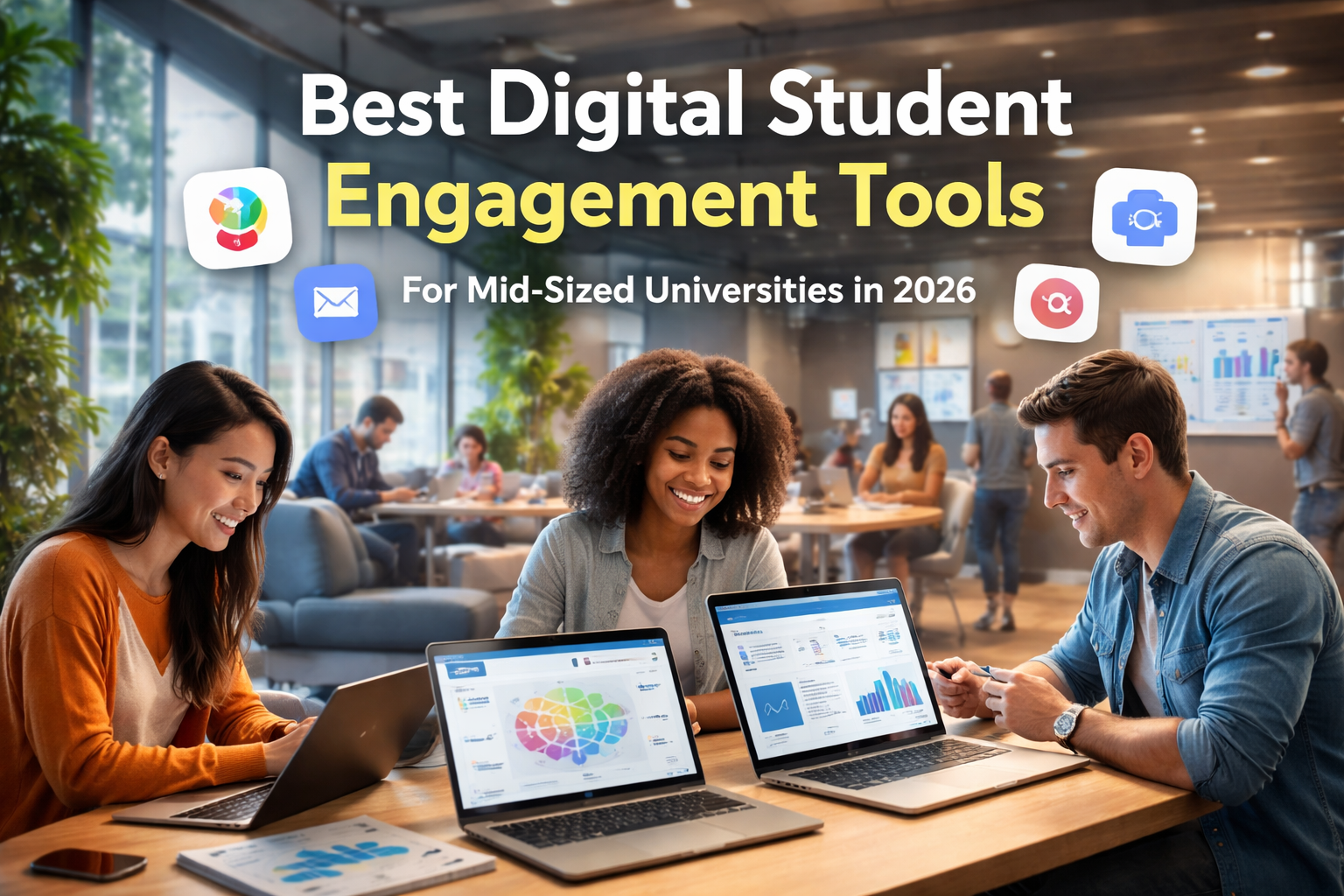
In 2026, mid-sized universities are operating with hybrid learning models, AI automation, and mobile-first students. Digital student engagement tools are no longer optional; they have become a core pillar for retention, academic performance, and institutional ROI.
2. Unified Communication & Collaboration Platforms
2.1 Campus-Wide Messaging & Collaboration
Tools like Slack and Microsoft Teams provide real-time communication across campuses—for courses, clubs, and peer groups.
Key Benefits:
- Instant chat and file sharing
- Zoom and calendar integrations
- Free tiers (ideal for pilot programs)
2.2 Learning Management Systems (LMS) as Engagement Hubs
LMS platforms such as Canvas, Blackboard Ultra, and Moodle are not just for assignments—they are critical for tracking student engagement.
Why LMS Matters:
- Login and submission analytics
- Early disengagement indicators
- AI-based alerts for at-risk students
3. AI-Powered Student Support & Analytics
3.1 24/7 AI Chatbots & Virtual Assistants
AI chatbots automate enrollment support, advising, and FAQs—reducing human workload while delivering instant responses.
Use Cases:
- Deadline reminders
- Admission and fee-related queries
- SMS and chat automation
3.2 Predictive Analytics for Retention
Advanced dashboards combine LMS data, attendance records, and student activity to generate early-warning signals.
Impact:
- Proactive advisor outreach
- Higher student retention rates
- Data-driven decision-making
4. Interactive & Gamified Learning Tools
4.1 Live Polling & Classroom Interactivity
Tools like Poll Everywhere and Mentimeter transform passive lectures into interactive learning experiences.
Examples:
- Live polls
- Word clouds
- Anonymous Q&A sessions
4.2 Gamification for Higher Engagement
Platforms such as Kahoot!, Quizizz, and similar tools add competition and fun to the learning process.
Why Gamification Works:
- Higher attention spans
- Instant feedback
- Better concept retention
5. Social & Community-Driven Engagement
5.1 Informal Learning via Social Platforms
Instagram, TikTok, and Facebook help build campus culture through events, clubs, and student stories.
5.2 Peer-to-Peer Communities
Discord, WhatsApp, and Telegram groups provide students with spaces for both academic collaboration and social bonding.
Best Practice:
Maintain moderation and establish clear usage guidelines.
6. Tool Comparison for Mid-Sized Universities
| Tool | Best Use Case | Key Feature | Pricing |
|---|---|---|---|
| Slack / Microsoft Teams | Collaboration & clubs | Real-time chat | Free + Paid |
| Canvas / Blackboard | Course engagement | Analytics & AI alerts | Institutional |
| Poll Everywhere | Live classroom interaction | Word clouds, polls | Free + EDU |
| Kahoot! / Quizizz | Gamified quizzes | Leaderboards | Free + Paid |
| AI Chatbots | Student support | 24/7 automation | Demo-based |
7. Implementation Strategy (Important Section)
7.1 Start Small, Then Scale
- Begin with a pilot in one department
- Use one tool for one specific use case
7.2 Training = Adoption
Without clear onboarding for faculty and students, even the best tools fail to gain adoption.
7.3 Integration-First Approach
LMS, SIS, and communication tools must be properly integrated; otherwise, data silos will emerge.
8. Recommendations for Mid-Sized Universities
- Choose multi-purpose tools
- Prioritize mobile-friendly platforms
- Test using free or EDU tiers
- Involve students in the decision-making process
9. Conclusion
In 2026, successful mid-sized universities will be those that treat communication, AI automation, analytics, and community as a unified ecosystem. The right digital student engagement tools significantly improve participation, retention, and academic outcomes.
10. FAQs
10.1 What are digital student engagement tools?
These are software platforms that improve interaction, tracking, and support between students and institutions.
10.2 How does AI improve student engagement?
AI delivers timely support through automation, personalization, and predictive analytics.
10.3 Which tools are best for mid-sized universities?
Scalable tools with flexible pricing—such as Slack/Teams, Canvas, and Poll Everywhere—are ideal choices.
10.4 How can engagement be measured?
Through usage data, participation rates, retention metrics, and student feedback surveys.