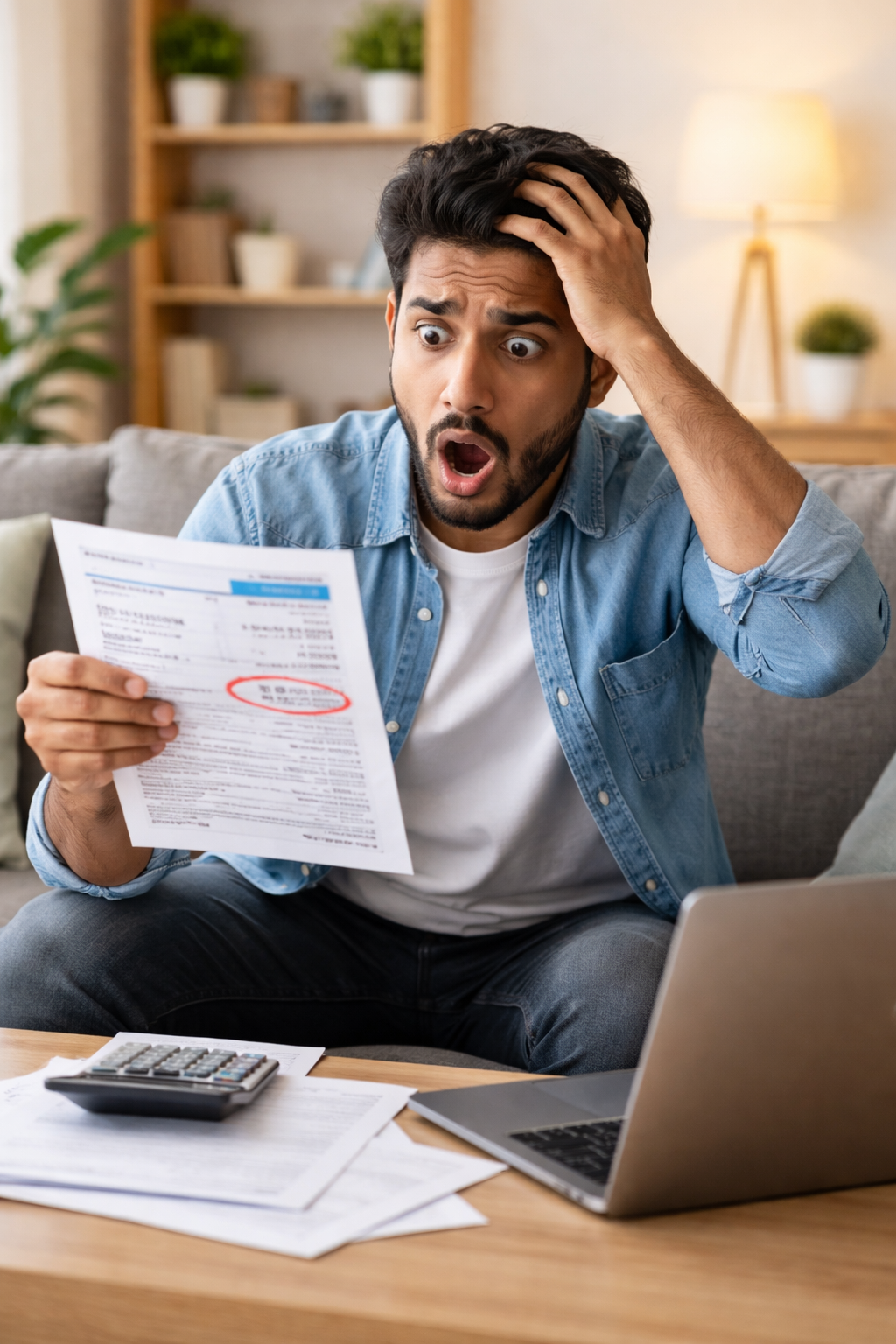
Have you ever looked at your electricity bill and felt shocked by the amount? If you’re wondering, “Why is my electric bill so high?”—you’re not alone. Many homeowners and renters experience sudden spikes in their electricity bills and feel confused about the cause.
The truth is, there can be several reasons behind a rising electric bill—such as weather changes, inefficient appliances, or hidden power drainers. The good news is that most of these problems have simple and practical solutions. Let’s break down, step by step, why your electric bill may be unusually high and how to fix each issue.
1. Increased HVAC Usage Due to Weather and Seasonal Changes
During summer, air conditioners run continuously, and in winter, heaters stay on for long hours. This significantly increases electricity consumption. In an average U.S. home, air conditioning alone accounts for about 12% of total electricity usage—and even more during heatwaves.
How to detect it:
- Compare your kWh usage with previous months
- Check your thermostat history—was it set too low or too high?
Fix:
- Adjust the thermostat by 2–3 degrees
- Check insulation and sealing around windows and doors
- Clean or replace HVAC filters
- Use ceiling or portable fans along with AC
2. Old and Inefficient Appliances and Lighting
Old appliances are one of the biggest electricity consumers. A refrigerator that’s 8–10 years old can use nearly double the electricity compared to a new ENERGY STAR model. The same applies to older ACs, washing machines, and incandescent bulbs.
How to detect it:
- Are you still using old appliances or yellow bulbs?
- Have you recently started using a new high-usage appliance (space heater, second fridge)?
Fix:
- Upgrade to ENERGY STAR–certified appliances
- Replace incandescent bulbs with LED bulbs
- Run washing machines and dishwashers only with full loads
- Use cold water for washing when possible
3. Phantom or Vampire Power Drain
Many electronic devices continue to consume electricity even when turned off—such as TVs, gaming consoles, printers, Wi-Fi routers, chargers, and smart speakers. This is known as phantom or vampire power drain.
According to research, idle devices can consume 20–25% of a household’s electricity.
How to detect it:
- Are many devices always plugged in?
- Is your bill high even when devices aren’t actively used?
Fix:
- Use smart power strips
- Turn off entertainment systems from the main switch at night
- Unplug mobile and laptop chargers once fully charged
4. High-Power New Devices (EVs, Pool Pumps, Space Heaters)
If you’ve recently added a high-electricity device such as:
- An electric vehicle (EV) charger
- Pool pump
- Space heater
- Dehumidifier
then a spike in your bill is normal. EV charging alone can add ₹4,000–₹5,000 per month, depending on usage.
How to detect it:
- Did the bill increase after adding a new device?
- Check the device’s wattage and daily usage
Fix:
- Charge or use heavy devices during off-peak hours
- Use timers
- Upgrade to energy-efficient models
5. Poor Insulation and HVAC Inefficiency
If your home has weak insulation or an aging HVAC system, the system has to run longer to maintain comfort—leading to higher electricity bills.
How to detect it:
- Do you feel air leaks near windows and doors?
- Are some rooms much hotter or colder than others?
- Does the HVAC system run continuously?
Fix:
- Install weather stripping on doors and windows
- Improve attic and wall insulation
- Change HVAC filters regularly
- Consider upgrading HVAC systems older than 10 years
6. Faulty Wiring or Electrical Issues
Sometimes the problem isn’t your appliances but faulty wiring or breakers. Electrical leaks can silently increase your electricity usage.
Warning signs:
- Flickering lights
- Breakers tripping frequently
- Warm switches or sockets
Fix:
- Call a licensed electrician immediately
- Get wiring and breakers inspected
- This improves both safety and cost control
7. Meter Reading Error or Billing Issues
A high bill doesn’t always mean high usage. Sometimes the issue lies in incorrect meter readings or billing cycle errors.
How to detect it:
- Compare the meter reading on your bill with the actual meter
- Check if the billing days are accurate
Fix:
- Contact your utility company
- Share meter photos or readings
- Corrections are usually issued if an error is found
8. Household Habits and Lifestyle Changes
Working from home, guests staying over, new gadgets, or routine changes can increase electricity usage without you realizing it. Using appliances during peak hours is also more expensive.
How to detect it:
- Are more people staying at home lately?
- Have laundry, cooking, or gaming hours increased?
Fix:
- Run dishwashers and washing machines during off-peak hours
- Use a smart thermostat
- Maintain better control over daily habits
Summary: The Control Is in Your Hands
A high electric bill can feel overwhelming, but in most cases, the solution is within your control. Check weather usage, appliances, phantom loads, wiring, and billing—one step at a time.
Small changes like switching to LED bulbs, using smart plugs, adjusting thermostat settings, and improving insulation can save significant money in the long run. If needed, consider a professional energy audit.
Knowledge is power. The more you understand, the better control you have over your electricity bill.
FAQs
Q: Why did my electric bill suddenly increase so much?
A: First, check for weather changes, new appliances, EV charging, or more people staying at home. Also verify the meter reading and billing period. Most spikes have a practical, trackable reason.
Q: How can I check if my electric meter is faulty?
A: Take photos of your meter at the start and end of the billing cycle and compare them with your bill. If there’s a mismatch, contact your utility company—they can test or replace the meter.
Q: Does unplugging devices really reduce the electric bill?
A: Yes. Devices in standby mode consume power 24/7. Using smart power strips or unplugging devices can reduce your bill by 10–20%.