If you live in an apartment and every month your electric bill gives you a shock 😵💫, you’re not alone.
Most people think, “The apartment is small—how can the bill be so high without using much electricity?”
But the reality is that apartments often have hidden electricity issues that silently increase your bill.
In this article, we’ll explain in simple language:
- Why electric bills are high
- Common problems in apartments
- How you can control and reduce the bill
1. Why Is the Electric Bill Higher in an Apartment?
If you want a straight answer, understand this 👇
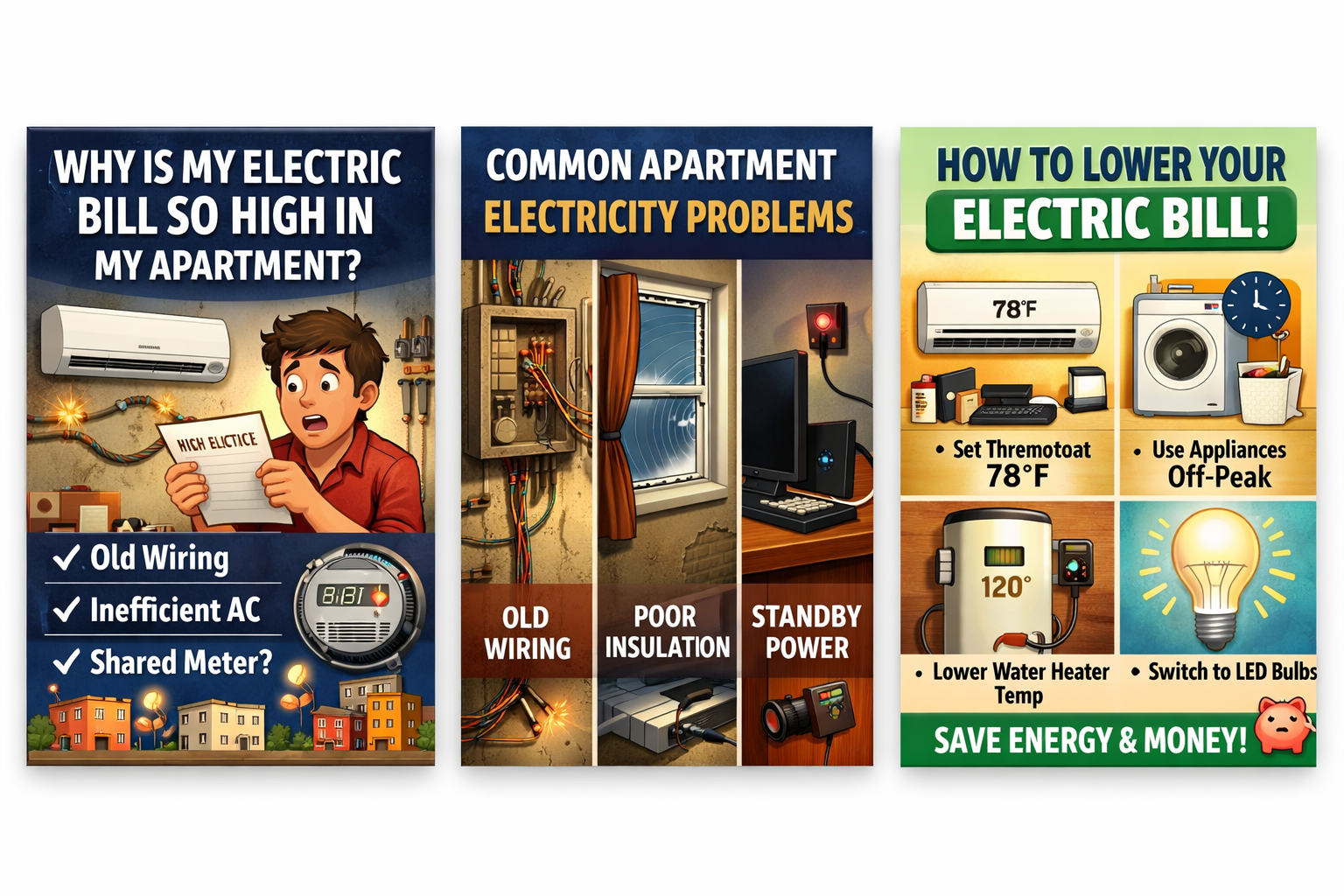
Electric bills in apartments are often high because of old wiring, poor insulation, inefficient AC/heaters, peak-hour electricity rates, and sometimes shared meters.
Even if usage is low, the system itself consumes more power.
2. Apartment vs House – Why Is the Bill Higher in Apartments?
This is something very few people talk about.
In apartments, usually:
- Wiring is old
- Insulation is weak
- AC / HVAC systems are outdated
- Appliances are installed by the landlord (often not energy-efficient)
That’s why, even with a smaller space, electricity wastage is higher.
3. Old Wiring – The Silent Electricity Killer
Many apartments are 15–30 years old.
Old wiring means:
- Power loss
- Appliances need more current
- The meter runs faster
What you can do:
- If lights flicker or breakers trip frequently, inform management
- Avoid using heavy appliances at the same time
4. Poor Insulation – AC and Heater Run Nonstop
Apartment walls are thin, and air leaks through windows.
Result:
- AC runs continuously in summer
- Heater runs continuously in winter
What you can do:
- Use thermal curtains
- Seal door gaps
- Keep blinds closed in the afternoon
Small steps, noticeable savings 💡
5. AC / HVAC Systems Consume the Most Electricity
ACs and heaters are the biggest power consumers in apartments.
Common problems:
- Old AC units
- Central HVAC (you can’t fully control it)
- Poor airflow
What you can do:
- Set thermostat to 78°F in summer
- Follow the 68°F rule in winter
- Clean AC filters regularly
- Use ceiling or stand fans
6. Electricity Is Expensive During Peak Hours
Many providers follow time-of-use pricing.
Peak hours usually: 🕙 10 AM – 8 PM (weekdays)
Electricity costs more during this time.
What you can do:
- Do laundry early morning or at night
- Run the dishwasher after peak hours
- Check if a fixed-rate plan is available
7. Standby Power – Small Things, Big Bill
TVs, gaming consoles, routers, chargers—even when “off”—still consume power.
In apartments, this works like slow poison.
What you can do:
- Use power strips
- Turn switches off at night
- Unplug unnecessary chargers
8. Water Heater Temperature Is Set Too High
Electric water heaters often run 24/7.
If the temperature is too high:
- Electricity is wasted
- Monthly bills stay high
What you can do:
- Set temperature to 120°F
- Avoid long showers
- Check tank insulation
9. Shared or Incorrect Meter – The Most Dangerous Reason
In some apartments:
- Meters are shared
- Or the meter is connected to another unit
In this case, you may be paying someone else’s electricity bill 😬
What you can do:
- Check usage when your home is empty
- Request meter verification from the utility company
- File a written complaint with management
10. Common Reasons for a Sudden Bill Spike
If your bill suddenly jumps in one month:
- Heatwave or cold wave
- Guests staying over
- An old appliance starting to fail
- Electricity rates increased
Always compare kWh usage, not just the bill amount.
11. How to Reduce Electric Bills in an Apartment (Practical Tips)
Things you can control: ✔ AC / heater usage
✔ Lighting and charging habits
✔ Peak-hour planning
✔ Using LED bulbs
Things the landlord should fix: ❌ Wiring
❌ Insulation
❌ HVAC system
❌ Meter issues
12. Checklist
✔ Is the AC running too much?
✔ Are lights left on unnecessarily?
✔ Are devices always plugged in?
✔ Heavy usage during peak hours?
✔ Weak insulation?
This checklist alone helps many people reduce their bills 👍
13. Final Conclusion
A high electric bill in an apartment does not mean you’re using electricity incorrectly.
In most cases, the problem lies with the system and building design.
As you understand the reasons:
- Guesswork stops
- Control increases
- Bills gradually come down 💰